
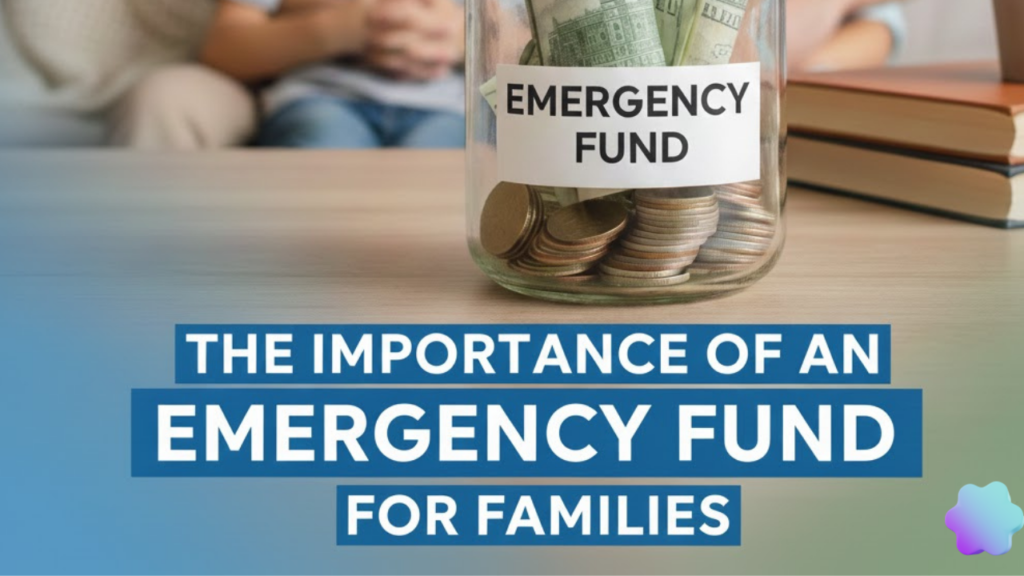

Have you ever wondered what would happen to YOUR family if an unexpected expense hit tomorrow?
A medical bill. A job loss. A car repair you didn’t plan for. Life happens fast, and without preparation, it can shake your finances hard.
By the end of this post, YOU will clearly understand The Importance of an Emergency Fund for Families, how to build one step by step, and how it can protect your peace, stability, and future.
Why The Importance of an Emergency Fund for Families Cannot Be Ignored
An emergency fund is not a luxury. It is a necessity.
For families, unexpected expenses are not a matter of if, but when.
The Importance of an Emergency Fund for Families lies in protection.
It protects YOUR household from financial panic.
It keeps YOU from relying on debt.
It gives YOU breathing room during stressful moments.
Families face unique risks.
Children get sick.
School fees increase suddenly.
Rent or mortgage payments do not wait.
Without an emergency fund, one surprise can undo years of progress.
With one, YOU stay in control.
Short-term loans and credit cards may feel like quick fixes.
But they come with interest.
They add pressure.
They create long-term problems.
An emergency fund absorbs the shock.
It keeps YOUR budget intact.
It allows YOU to make calm decisions.
That is why financial experts consistently stress The Importance of an Emergency Fund for Families.
It is the foundation of financial security.
The Importance of an Emergency Fund for Families in Planning for the Unexpected
Unexpected expenses are part of real life.
They are not budgeting failures.
They are normal events.
Think about common family emergencies.
Medical bills not fully covered by insurance.
Car breakdowns.
Temporary loss of income.
Urgent home repairs.
These expenses rarely come with warning.
They demand cash immediately.
This is where The Importance of an Emergency Fund for Families becomes clear.
It allows YOU to respond instead of react.
When YOU have savings set aside, YOU do not panic.
YOU do not borrow from friends.
YOU do not delay important decisions.
An emergency fund gives YOU flexibility.
It buys time.
It reduces stress.
Families with emergency funds recover faster.
They return to normal routines sooner.
Children feel more secure.
Financial stability is not about being wealthy.
It is about being prepared.
By planning for emergencies, YOU create resilience.
YOU protect YOUR family’s emotional and financial well-being.
That is the true value behind The Importance of an Emergency Fund for Families.
How Much Should YOU Save? Understanding the Importance of an Emergency Fund for Families
One common question families ask is simple.
“How much is enough?”
The general rule is three to six months of essential expenses.
This includes rent or mortgage.
Food.
Utilities.
Transportation.
School necessities.
For single-income households, six months is safer.
For dual-income families, three to four months may work.
The key is realism.
YOUR emergency fund should reflect YOUR lifestyle.
Not someone else’s.
This is another reason The Importance of an Emergency Fund for Families matters.
It is personal.
It is flexible.
If saving months of expenses feels overwhelming, start small.
Save one month first.
Then build gradually.
Consistency matters more than speed.
Small deposits add up.
Progress builds confidence.
Do not wait for the “perfect” moment.
There is no perfect time to start saving.
The best time is now.
An emergency fund is not built overnight.
But every step strengthens YOUR family’s safety net.
Practical Steps to Build an Emergency Fund Without Stress
Building an emergency fund does not require extreme sacrifice.
It requires intention.
Start by setting a clear goal.
Know exactly what YOU are saving for.
Emergencies only.
Open a separate savings account.
This reduces temptation.
It creates boundaries.
Automate your savings if possible.
Even small amounts matter.
Automation removes decision fatigue.
Cut unnecessary expenses temporarily.
Review subscriptions.
Limit impulse spending.
Use windfalls wisely.
Tax refunds.
Bonuses.
Extra income.
These steps reinforce The Importance of an Emergency Fund for Families.
They turn saving into a habit.
Involve the whole family.
Explain why saving matters.
Teach children financial responsibility early.
When families work together, progress feels easier.
Saving becomes a shared mission.
Remember, the goal is stability.
Not perfection.
When to Use Your Emergency Fund and When Not To
An emergency fund has a specific purpose.
It is not for vacations.
It is not for shopping.
It is not for planned expenses.
Use it for true emergencies.
Health issues.
Job loss.
Urgent repairs.
After using it, rebuild immediately.
Restoring the fund is part of the process.
This discipline reinforces The Importance of an Emergency Fund for Families.
It ensures the fund is always ready.
Clear rules prevent guilt and confusion.
YOU know when it is appropriate.
YOU stay confident in your financial plan.
Conclusion
Life will always be unpredictable.
But YOUR response does not have to be.
The Importance of an Emergency Fund for Families is about more than money.
It is about peace of mind.
It is about stability.
It is about protecting what matters most.
When YOU have an emergency fund, YOU feel prepared.
YOU feel empowered.
YOU feel secure.
Financial literacy starts with simple steps.
Saving for emergencies is one of the most powerful.
By understanding, planning, and acting, YOU give YOUR family a stronger future.
One where unexpected expenses do not derail progress.
One where confidence replaces fear.
That is the true value of an emergency fund.
The content on Freedom With Cents is provided for informational and educational purposes only. We make no representations or warranties regarding the accuracy, completeness, applicability, or fitness of any information published on this site. The articles and materials are not intended to serve as legal, tax, financial, investment, or professional advice of any kind.
Nothing contained on this website constitutes a solicitation, endorsement, or offer to buy or sell any financial products, services, securities, or other instruments. All content is general in nature and may not be suitable for your personal financial situation or goals.
You should consult with a qualified professional before making any financial decisions based on information provided here. You are solely responsible for evaluating the risks and outcomes associated with any actions you take based on our content.