

Have you ever wondered how your child would react if something unexpected happened tomorrow?
A broken phone. A sudden school trip.
A medical bill. Life is full of surprises, and not all of them are pleasant. As a parent, you know this. The real question is whether your child is learning it too.
When you teach kids early about planning for the unexpected, you give them confidence, resilience, and practical money skills that last a lifetime.
By reading this post, you will gain clear, simple strategies to help your children understand unexpected expenses and feel prepared rather than afraid.
Why Teaching Kids About the Unexpected Matters Early?
Kids live in the present. That is normal. They expect things to work out because adults usually handle the problems. But real life does not always cooperate. When you introduce the idea of surprises—both good and bad—you help your child build awareness.
Teaching Kids About the Unexpected is not about fear. It is about readiness. Children who understand that money has limits make better decisions. They learn patience. They learn trade-offs. They learn that planning today protects tomorrow.
Unexpected expenses happen in every family. Shoes wear out. School supplies cost more than expected. A pet needs care. These moments are powerful teaching tools. When you explain them calmly, kids begin to see money as a tool, not magic.
Early lessons also reduce entitlement. Kids stop assuming money appears on demand. They start asking smarter questions. That is financial literacy in action.
Teaching Kids About the Unexpected Through Everyday Conversations
You do not need a classroom lesson. You need daily life. Kids learn best through simple conversations.
Start small. Use real examples. Say things like, “We planned to buy snacks today, but the car needed fuel.” This shows prioritization. It shows choices. Keep sentences short. Keep explanations honest.
Teaching Kids About the Unexpected works best when it feels normal. Talk during grocery shopping. Talk while paying bills. Talk when plans change. These moments build understanding without pressure.
Ask questions. “What do you think we should do?” This invites thinking. It builds confidence. Kids feel included, not lectured.
Avoid panic language. Stay calm. Your tone teaches more than your words. When YOU model calm problem-solving, kids copy it. They learn that surprises are manageable.
Teaching Kids About the Unexpected Using Simple Money Tools
Kids need visuals. Abstract ideas are hard. Tools make lessons stick.
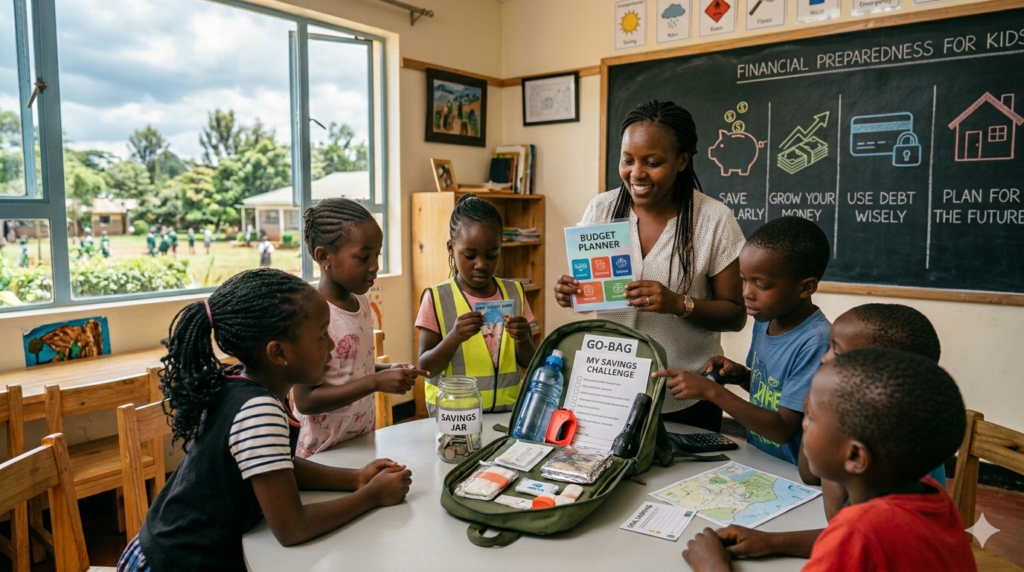
Start with a small family emergency jar. Label it clearly. Explain its purpose. This jar is not for toys. It is for surprises. Even coins matter. Kids love seeing progress.
Teaching Kids About the Unexpected becomes real when kids contribute. Let them add a portion of allowance. Let them see how saving takes time.
Use envelopes or digital trackers for older kids. Show categories. Needs. Wants. Unexpected. This teaches structure. It teaches boundaries.
When an unexpected cost happens, use the tool. Do not hide it. Say, “This is why we saved.” That moment connects effort to reward. It builds trust in the process.
Teaching Kids About the Unexpected and Emotional Readiness
Money surprises are emotional. Kids feel disappointment when plans change. That is okay. Emotional skills are part of preparedness.
Teaching Kids About the Unexpected includes helping kids name feelings. Say, “I know this is frustrating.” Validation builds security. It does not weaken discipline.
Then guide them forward. Ask, “What can we do next?” This shifts focus from loss to action. It teaches resilience.
Share age-appropriate stories. Talk about times YOU adjusted plans. Kids relate to honesty. They learn that adults adapt too.
Prepared kids do not panic easily. They think. They adjust. They move forward. That skill is priceless.
Teaching Kids About the Unexpected Through Real-Life Scenarios
Practice makes confidence. Use simple “what if” games.
What if your school bag breaks?
What if a friend’s birthday comes up suddenly?
What if the power goes out?
Teaching Kids About the Unexpected through scenarios builds problem-solving skills. Let kids suggest solutions. Do not rush to correct them. Guide gently.
For teens, go deeper. Discuss medical costs. Talk about insurance basics. Explain why families save before spending. Keep it practical. Keep it real.
Tie lessons to goals. Show how preparedness protects dreams. Saving for surprises means fewer setbacks. Kids understand cause and effect when YOU explain it clearly.
Teaching Kids About the Unexpected at Different Ages
One size does not fit all. Tailor the lesson.
For young kids, focus on simple ideas. Saving. Waiting. Choosing. Use stories and play.
For older kids, introduce numbers. Budgets. Trade-offs. Opportunity cost. Keep language clear.
For teens, connect preparedness to independence. Emergencies happen in adult life. Rent. Transport. Health. These are real. Treat them with respect.
Teaching Kids About the Unexpected grows as your child grows. The lesson evolves, but the foundation stays strong.
Conclusion
Life will always bring surprises. Some are joyful. Some are challenging. When you take time to prepare your children, you give them more than money skills.
You give them confidence, calm thinking, and resilience. Teaching Kids About the Unexpected helps kids understand that challenges are not failures.
They are part of life. With steady guidance, honest conversations, and simple tools, you can raise children who face the unexpected with wisdom instead of fear.
The content on Freedom With Cents is provided for informational and educational purposes only. We make no representations or warranties regarding the accuracy, completeness, applicability, or fitness of any information published on this site. The articles and materials are not intended to serve as legal, tax, financial, investment, or professional advice of any kind.
Nothing contained on this website constitutes a solicitation, endorsement, or offer to buy or sell any financial products, services, securities, or other instruments. All content is general in nature and may not be suitable for your personal financial situation or goals.
You should consult with a qualified professional before making any financial decisions based on information provided here. You are solely responsible for evaluating the risks and outcomes associated with any actions you take based on our content.